The fascination with Roman gladiators transcends time, evoking images of brave warriors facing each other in combat. These matches, which varied in style and rules, constituted one of the most thrilling and profitable entertainments of Ancient Rome, capturing the attention and spirit of the public.
At Antiqva Clio, through our Lvdvs gladiatorivm, we strive to offer an authentic and detailed representation of the world of gladiators. Our research spans from their roots in Etruscan culture to the social context in which these fighters operated. We delve into how Roman citizens perceived them, seeing gladiators as both heroes and tragic figures.
Guided by the figure of the lanista, the owner of the lvdus, and under the strict supervision of the doctore, gladiators trained and became legends, such as Flamma, Vero, Prisco, and Atilivs, whose names have endured thanks to their feats in the arenas throughout the empire. In our Lvdus Mars Carpetanvm, we revive the history of these fighters, whose sole aim was to earn a living and, hopefully, attain the freedom, honor, and glory granted to them by the gods.
By recreating gladiator fights, we not only seek to entertain but also to enlighten and educate about the complexity of this aspect of Roman culture. Each recreation is an opportunity for the audience to experience the intensity and drama of what it was like to be a gladiator, from entering the ludus, training, daily life, to the moment of combat in the arenas of the amphitheaters of the empire.


Types of Gladiators
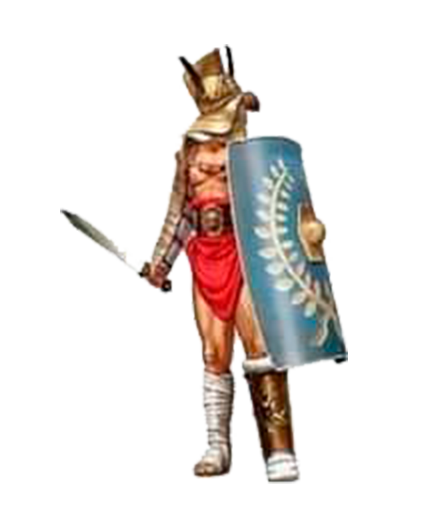
Murmillo
Recognizable by the fish figure on his helmet, his clothing and weapons likely derived from Gallic prisoners. The Murmillo was armed with a gladius and a rectangular shield in the Gallic style, and he also wore a greave on his left leg and a bracelet on his right arm. In combat, they typically faced Thracians, Retiarii, or Hoplomachi.
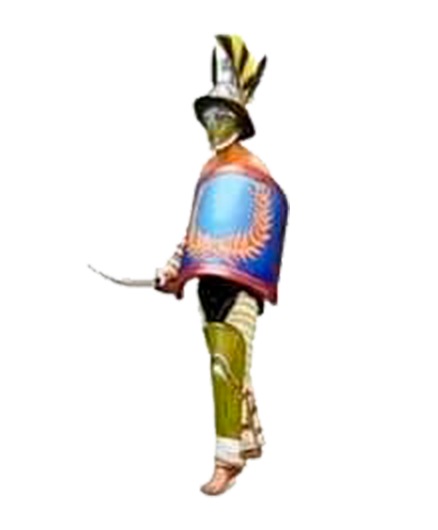
Thracian
The Thracians were known for being incredibly fierce warriors, and their armament mimicked that of the warriors from Thrace. Equipped with a small rectangular shield called a parma and a very short sword with a slightly curved blade called a sica, the main objective of the Thracian in combat was to attack the unarmored back of his opponent. They often faced the Murmillos.
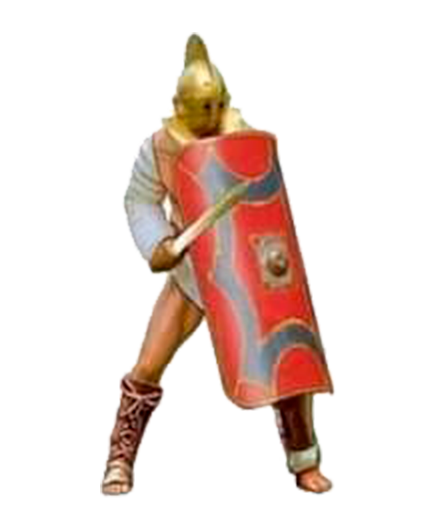
Secutor
The Secutor was known for his heavy armament, which made him a fortress in battle. He was equipped with a short sword called a gladius, a shield similar to that of the legionaries called a scutum, a spherical helmet, and heavy almost full-body armor. His name, which means 'pursuer,' reflects his combat tactic: to relentlessly chase down his opponent. On the other hand, his armament weighed between 15 and 18 kg, which could quickly tire the Secutor, so his opponents often tried to keep him moving until he was exhausted. They frequently faced the Retiarii.
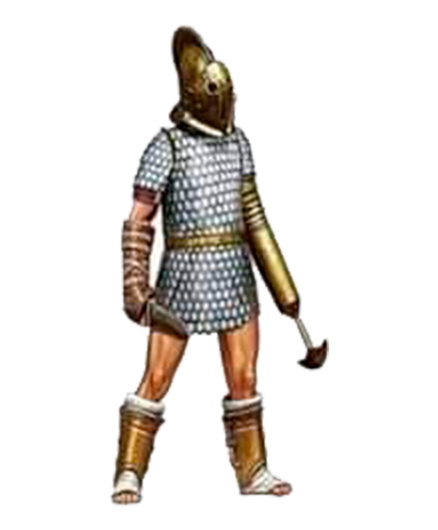
Scissor
The Scissor fought with a weapon called the Roman scissors, which consisted of a hardened steel tube that covered the entire forearm and hand of the gladiator, with a crescent-shaped blade at the end of the tube. The shape of the blade, being semicircular, was such that even a slight contact could cause serious damage. Additionally, he wore a helmet very similar to that of the Secutor. In combat, the Scissor could use his arm to block and protect himself from blows delivered by his opponent and quickly launch a counterattack.
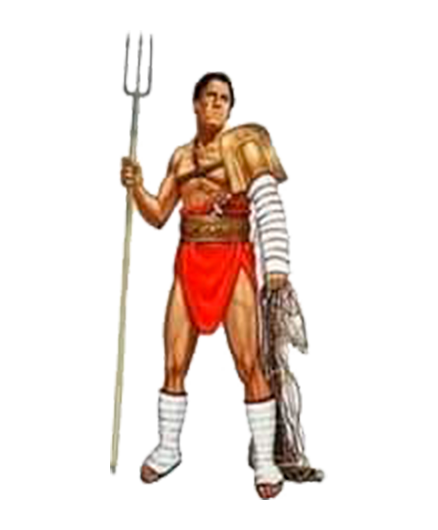
Retiarius
The Retiarius was a type of gladiator who fought with equipment similar to that used by fishermen: a weighted net (rete), a trident (fuscina or tridens), and a dagger (pugio). He fought with lightweight armament, protecting himself with an arm guard called a manica and a shoulder guard known as a galerus. His attire typically consisted of garments called subligaculum, secured with a wide belt (balteus), or a short tunic. In combat, Retiarii often faced Secutores or Murmillos, using their net to ensnare their opponent and their trident to attack while their adversary was immobilized. Their combat strategy relied more on maintaining distance and speed rather than on frontal attack.
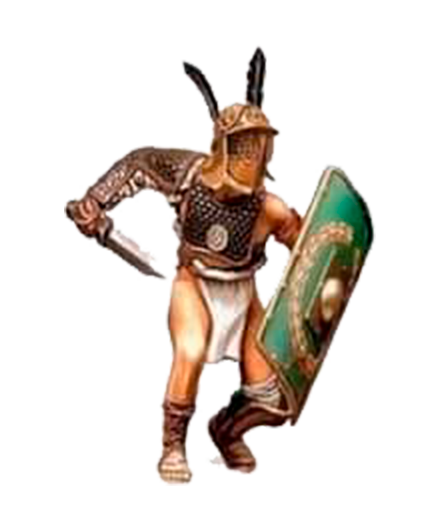
Provocator
Recognized by his helmet with two visors and a chest guard or cardiofílax, the Provocator was equipped with an elongated rectangular shield, similar to that of the Roman legionary (scutum), although slightly smaller, and a short sword. He also wore an arm guard (manica) on the arm holding the sword, a wide metal belt, and leg protections called fasciae. In combat, Provocators typically faced each other. The fights could last several minutes or even hours, and the audience would often cheer for their favorites with shouts and applause.
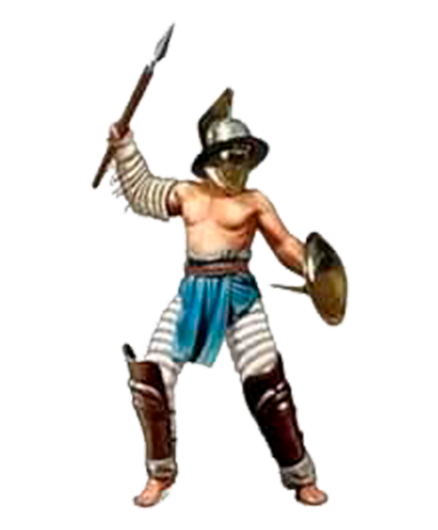
Hoplomachus
Their weapons and armor mimicked those of the Greek hoplites, featuring heavy armor, a helmet, and a round shield. They used either a spear or a sword (gladius) as weapons. The shield served as an attacking weapon almost as much as the sword or spear. The Hoplomachus was often pitted against the Murmillo.
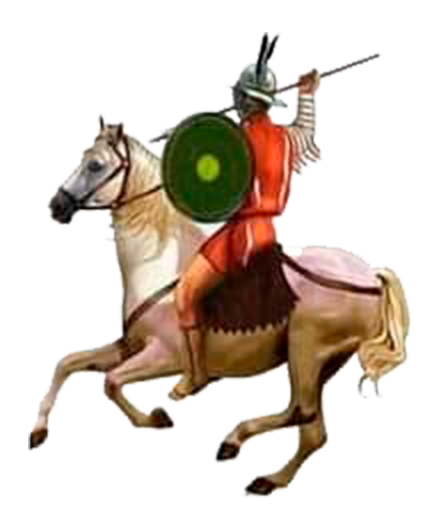
Equite
The Equite fought on horseback and was equipped with a short sword and a round shield. Unlike other types of gladiators, the Equites began their fights on horseback but would dismount and continue the battle on foot. They often faced other Equites.